Tsukuba Uchu Forum

159th Uchu Forum

The Cosmic Himalayas; An Extreme Quasar Concentration at Cosmic Noon Bridging AGNs, Galaxies, and IGM

Image

Yongming Liang

ICRR, The University of Tokyo

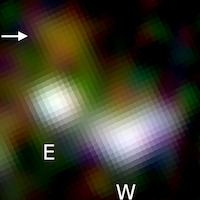
Roughly 10 billion years ago, during the Universe’s most active phase of star formation and black hole accretion, commonly known as Cosmic Noon, an extreme structure was discovered: a dense concentration of 11 luminous quasars within a comoving volume of $\sim 40$ cMpc$^3$ at redshift $z \approx 2.2$. This extreme...

158th Uchu Forum

Ionization Environment in Star-Forming Galaxies during the Epoch of Reionization

Image

Yuma Sugahara

Waseda University

ALMA and JWST have been pushing up the redshift frontier to z~14 and pioneering metal emission line studies in star-forming galaxies at $z > 5$. These telescopes are powerful tools for high-redshift probes even on their own, but their multi-wavelength synergy is opening a new window in the high-redshift studies....

157th Uchu Forum

Looking for black holes through peculiar molecular clouds in the galactic center region

Image

Shunya Takekawa

Kanagawa University

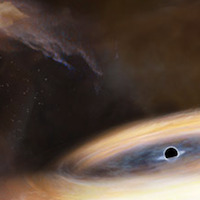
The region within a radius of approximately 200 parsecs from the Galactic Center is known as the Central Molecular Zone (CMZ). This area is a dense concentration of molecular gas that is hotter, denser, and more turbulent than the gas in the galactic disk. The CMZ contains a large number...

156th Uchu Forum

Dark matter signatures in/from the Universe

Image

Nagisa Hiroshima

Yokohama National University

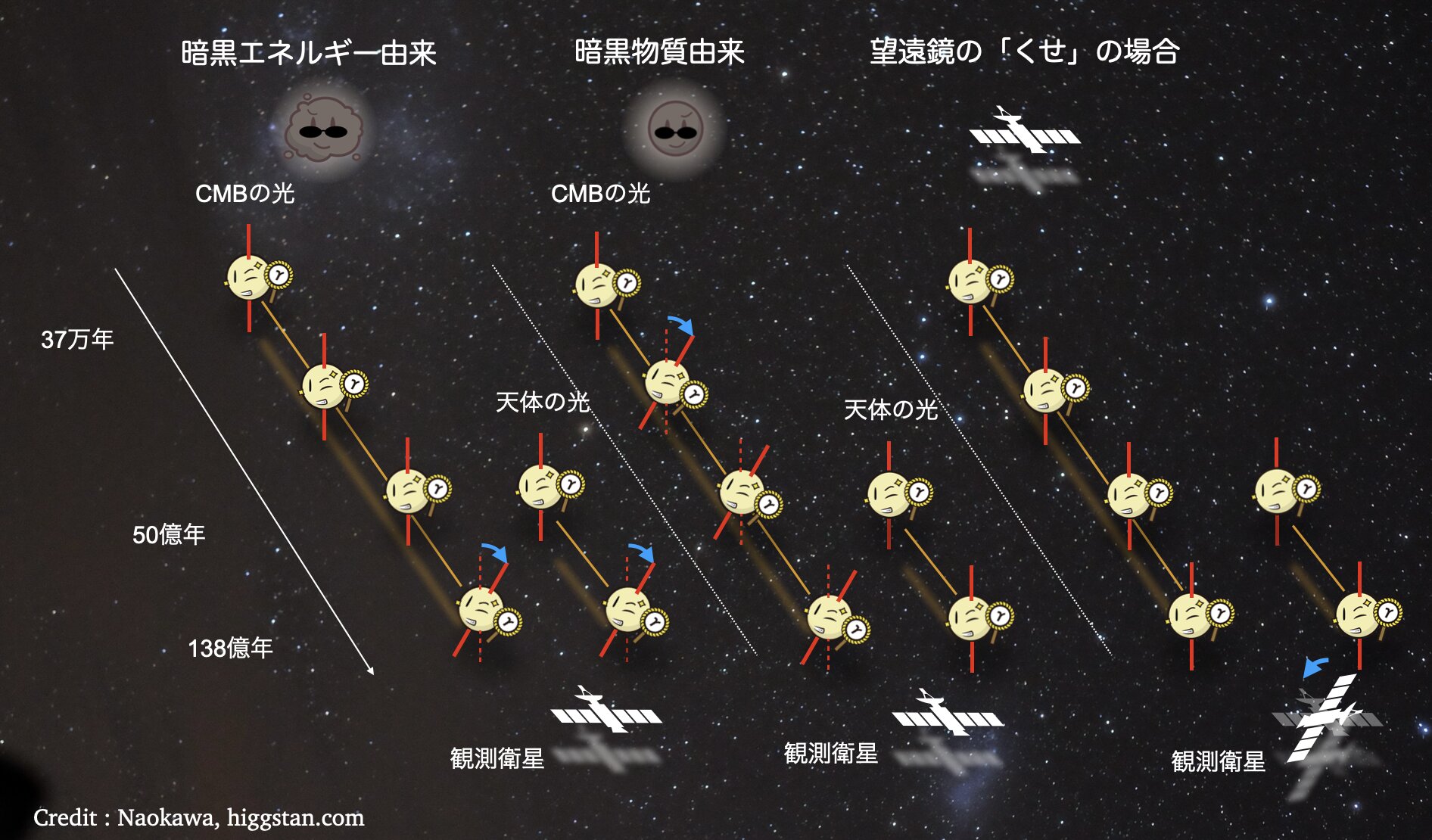
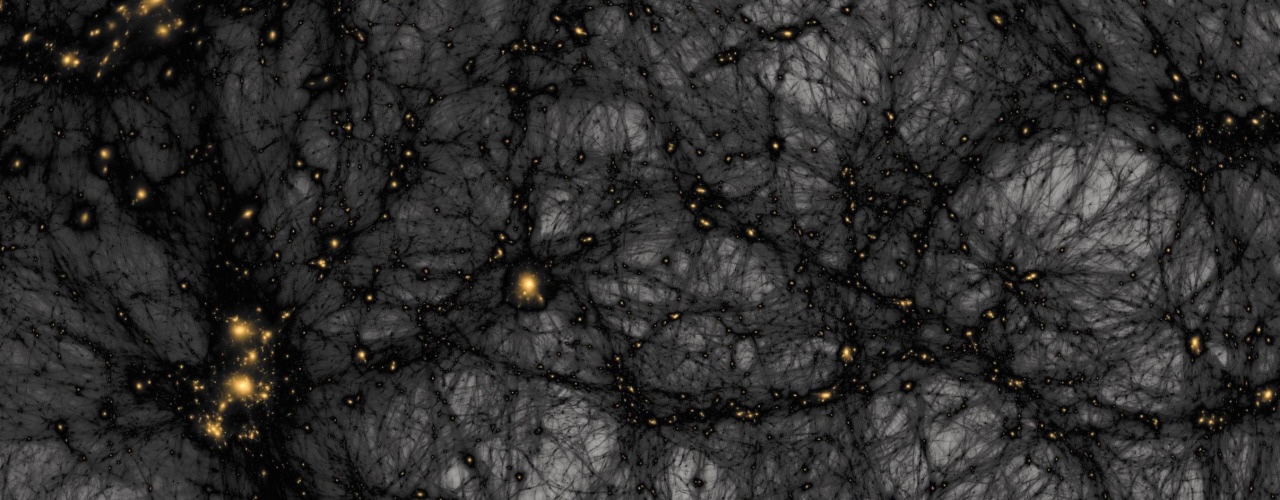
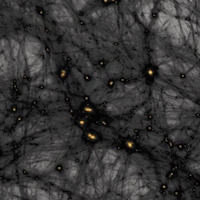
Dark matter (DM) is a mysterious energy component of our Universe which occupies about a quarter of its total energy density. The existence of DM is necessary for realizing our visible world, however, the detailed properties of DM are still unknown. In this talk, I will explain the motivation and...

155th Uchu Forum

Supermassive star and supermassive black-hole formation through accretinon on cosmological scales

Image

Masaki Kiyuna

Tohoku University

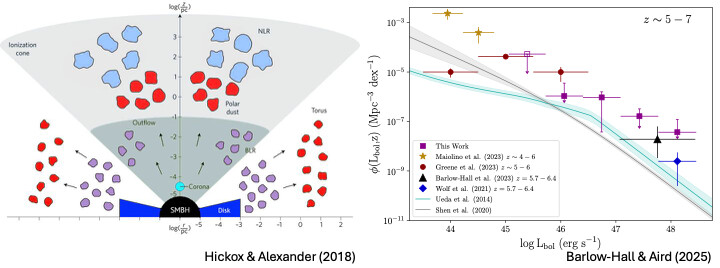
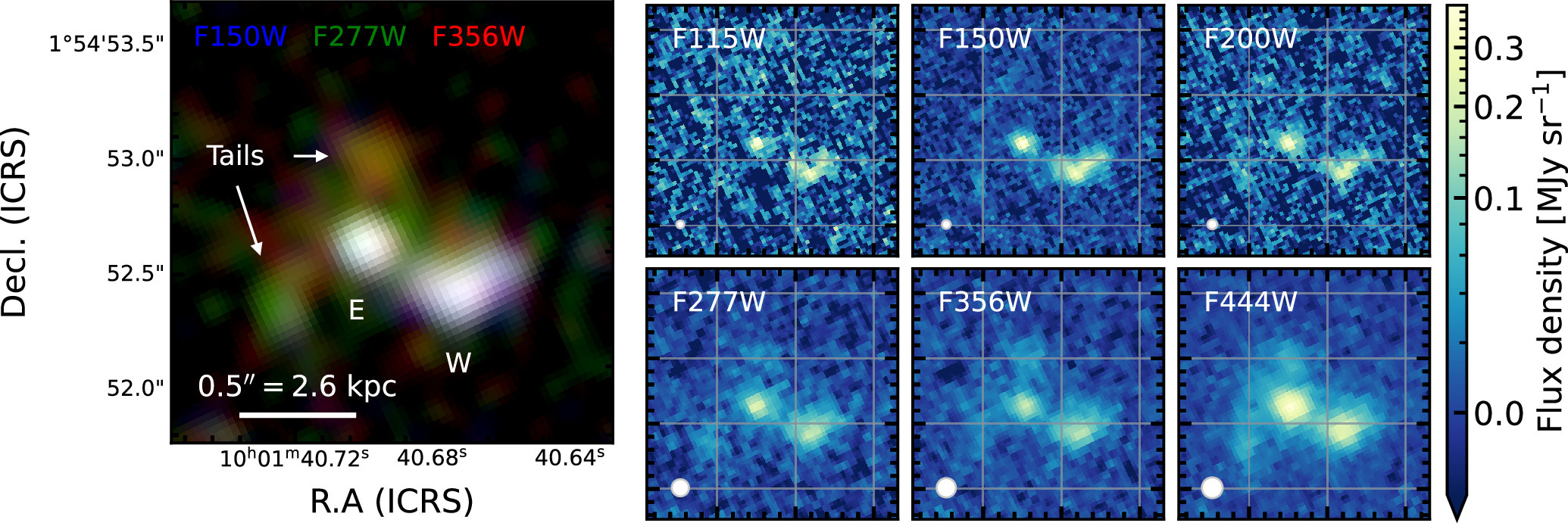
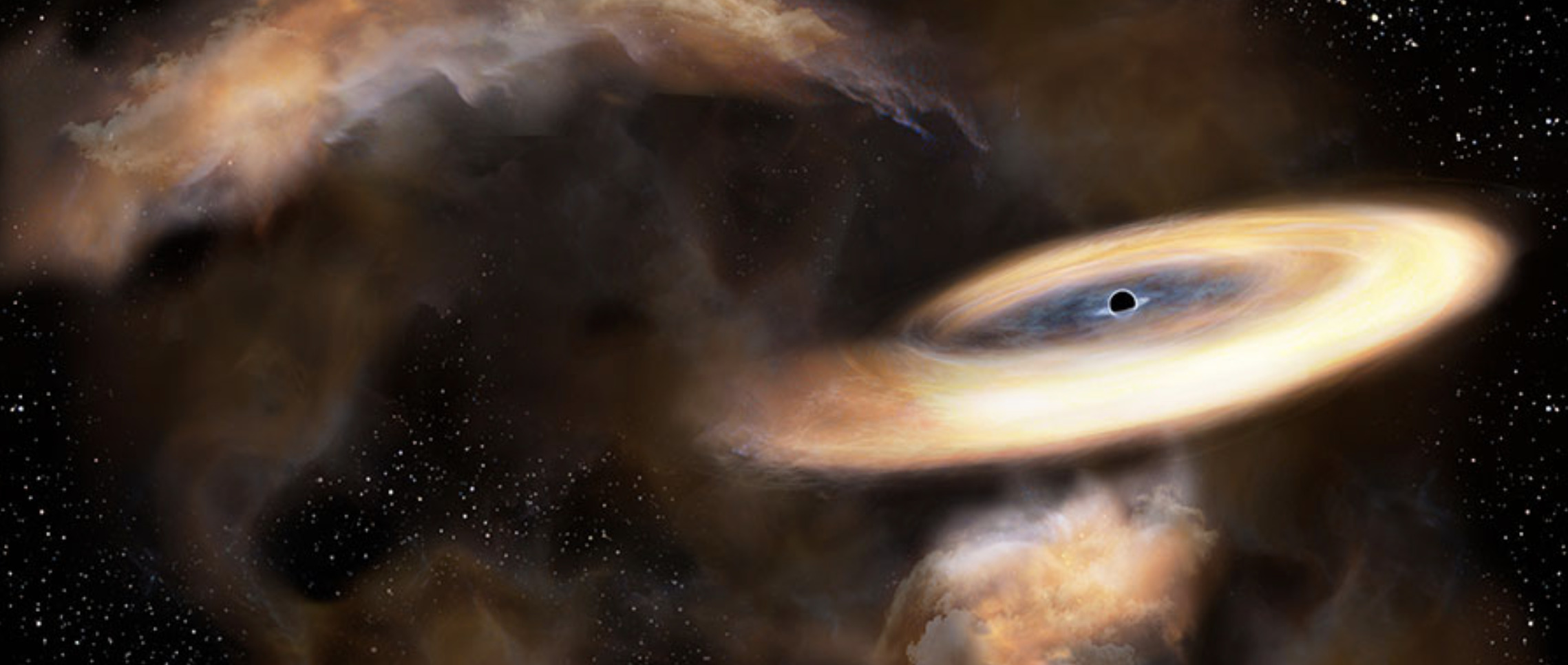
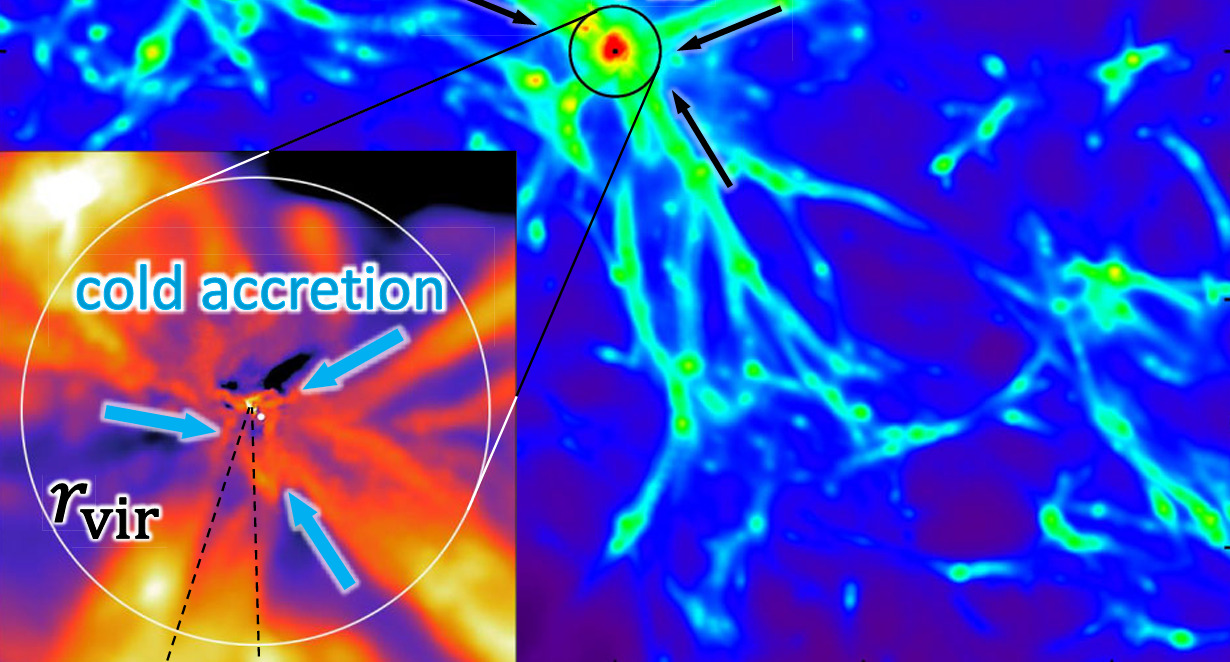
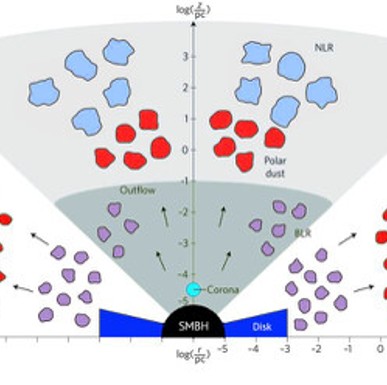
Supermassive black holes (SMBHs), with masses ranging from 10^6 to 10^10 solar masses (Msun), are known to exist ubiquitously at the centres of galaxies. How such massive objects formed remains a major open question in astrophysics. Recent observations with the James Webb Space Telescope (JWST) have revealed SMBHs with masses...

154th Uchu Forum

Spatial and spectral variation of the 12CO(J=2-1)/12CO(J=1-0) line ratio in nearby galaxies

Image

Shinya Komugi

Kogakuin University of Technology & Engineering

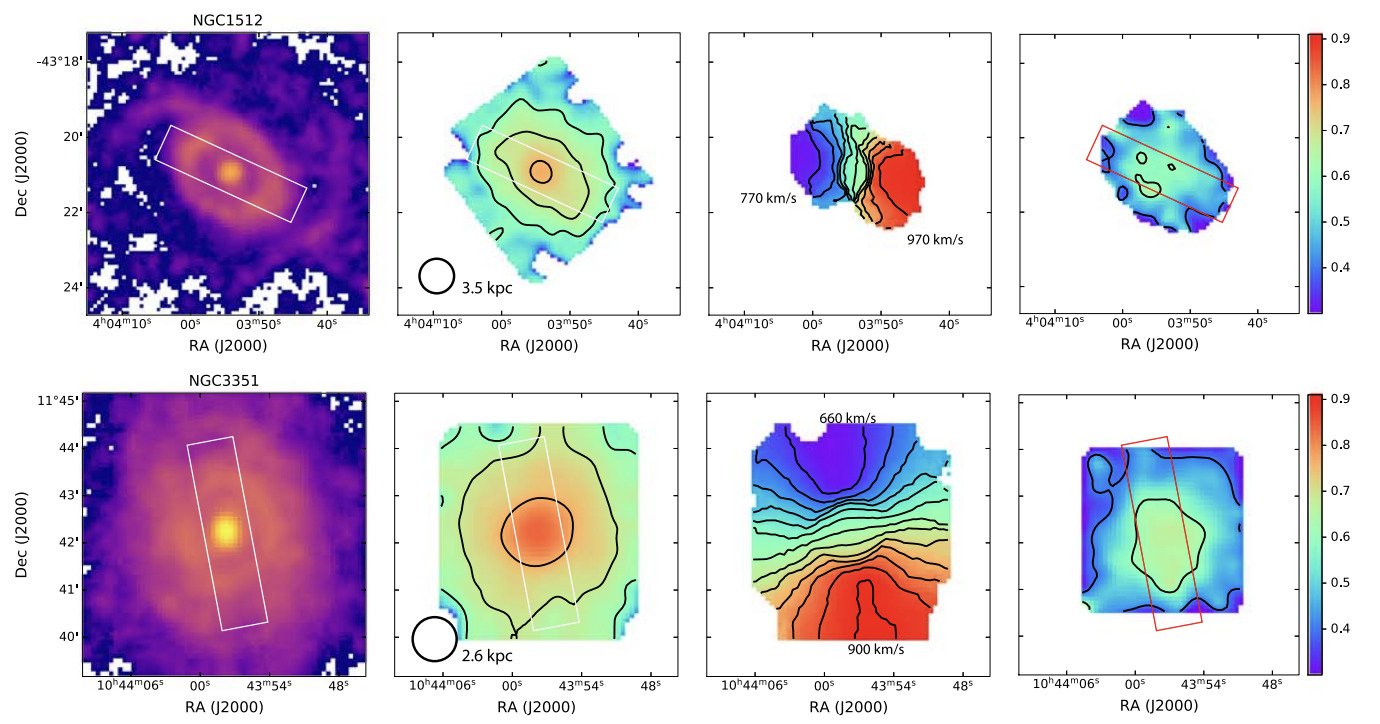
We present 12CO(J = 1 – 0) mapping observations over ∼1/2 of the optical disk of 12 nearby galaxies from the Fundamental CO 1–0 Transition Survey of nearby galaxies (FACTS), using the ALMA Total Power array. Variations in the 12CO(J = 2 − 1)/12CO(J = 1 − 0) line ratio...

153rd Uchu Forum

Carbon-Chain Chemistry in Active Star-Forming Regions

Image

Kotomi Taniguchi

National Astronomical Observatory of Japan

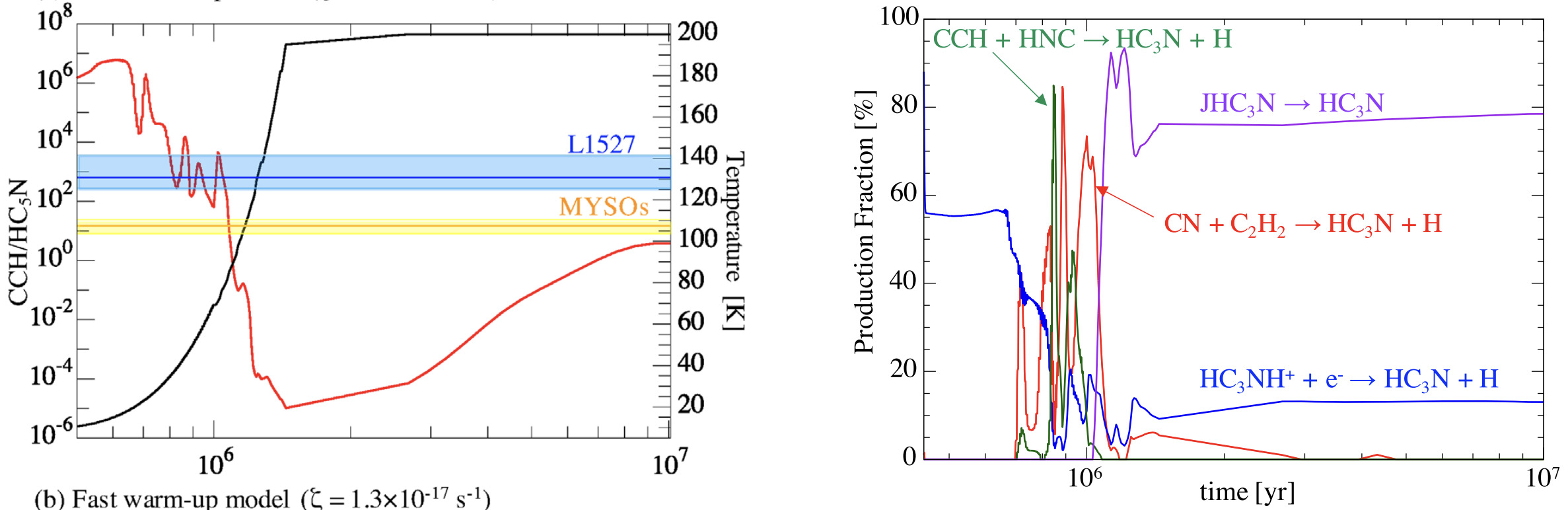
Carbon chain molecules, which consist of a series of carbon atoms, are molecules unique to interstellar space. Of the approximately 320 types of interstellar molecules discovered to date, approximately 40% are classified as carbon chain molecules. The chemistry of carbon chain molecules has been studied in low-mass star-forming regions in...

159th Uchu Forum

Image

The Cosmic Himalayas; An Extreme Quasar Concentration at Cosmic Noon Bridging AGNs, Galaxies, and IGM

Yongming Liang

ICRR, The University of Tokyo

Roughly 10 billion years ago, during the Universe’s most active phase of star formation and black hole accretion, commonly known as Cosmic Noon, an extreme structure was discovered: a dense concentration of 11 luminous quasars within a comoving volume of $\sim 40$ cMpc$^3$ at redshift $z \approx 2.2$. This extreme...

November 2025   15 : 30     quasars, large scale structure, and high-z galaxies
158th Uchu Forum

Image

Ionization Environment in Star-Forming Galaxies during the Epoch of Reionization

Yuma Sugahara

Waseda University

ALMA and JWST have been pushing up the redshift frontier to z~14 and pioneering metal emission line studies in star-forming galaxies at $z > 5$. These telescopes are powerful tools for high-redshift probes even on their own, but their multi-wavelength synergy is opening a new window in the high-redshift studies....

October 2025   15 : 30     ALMA, JWST, and high-z galaxies
157th Uchu Forum

Image

Looking for black holes through peculiar molecular clouds in the galactic center region

Shunya Takekawa

Kanagawa University

The region within a radius of approximately 200 parsecs from the Galactic Center is known as the Central Molecular Zone (CMZ). This area is a dense concentration of molecular gas that is hotter, denser, and more turbulent than the gas in the galactic disk. The CMZ contains a large number...

September 2025   15 : 30     Galactic center, molecular clouds, and black holes
156th Uchu Forum

Image

Dark matter signatures in/from the Universe

Nagisa Hiroshima

Yokohama National University

Dark matter (DM) is a mysterious energy component of our Universe which occupies about a quarter of its total energy density. The existence of DM is necessary for realizing our visible world, however, the detailed properties of DM are still unknown. In this talk, I will explain the motivation and...

July 2025   15 : 10     dark matter, high-energy astrophysics, and semi-analytic models
155th Uchu Forum

Image

Supermassive star and supermassive black-hole formation through accretinon on cosmological scales

Masaki Kiyuna

Tohoku University

Supermassive black holes (SMBHs), with masses ranging from 10^6 to 10^10 solar masses (Msun), are known to exist ubiquitously at the centres of galaxies. How such massive objects formed remains a major open question in astrophysics. Recent observations with the James Webb Space Telescope (JWST) have revealed SMBHs with masses...

June 2025   15 : 10     black holes, early universe, and cosmological simulations
154th Uchu Forum

Image

Spatial and spectral variation of the 12CO(J=2-1)/12CO(J=1-0) line ratio in nearby galaxies

Shinya Komugi

Kogakuin University of Technology & Engineering

We present 12CO(J = 1 – 0) mapping observations over ∼1/2 of the optical disk of 12 nearby galaxies from the Fundamental CO 1–0 Transition Survey of nearby galaxies (FACTS), using the ALMA Total Power array. Variations in the 12CO(J = 2 − 1)/12CO(J = 1 − 0) line ratio...

May 2025   15 : 30     ALMA, molecular gas, and AGN feedback
153rd Uchu Forum

Image

Carbon-Chain Chemistry in Active Star-Forming Regions

Kotomi Taniguchi

National Astronomical Observatory of Japan

Carbon chain molecules, which consist of a series of carbon atoms, are molecules unique to interstellar space. Of the approximately 320 types of interstellar molecules discovered to date, approximately 40% are classified as carbon chain molecules. The chemistry of carbon chain molecules has been studied in low-mass star-forming regions in...

April 2025   15 : 30     Astrochemistry, ALMA, and Nobeyama 45m radio telescope

159th Uchu Forum The Cosmic Himalayas; An Extreme Quasar Concentration at Cosmic Noon Bridging AGNs, Galaxies, and IGM

Yongming Liang (ICRR, The University of Tokyo)
November 2025   15 : 30     quasars, large scale structure, and high-z galaxies

158th Uchu Forum Ionization Environment in Star-Forming Galaxies during the Epoch of Reionization

Yuma Sugahara (Waseda University)
October 2025   15 : 30     ALMA, JWST, and high-z galaxies

157th Uchu Forum Looking for black holes through peculiar molecular clouds in the galactic center region

Shunya Takekawa (Kanagawa University)
September 2025   15 : 30     Galactic center, molecular clouds, and black holes

156th Uchu Forum Dark matter signatures in/from the Universe

Nagisa Hiroshima (Yokohama National University)
July 2025   15 : 10     dark matter, high-energy astrophysics, and semi-analytic models

155th Uchu Forum Supermassive star and supermassive black-hole formation through accretinon on cosmological scales

Masaki Kiyuna (Tohoku University)
June 2025   15 : 10     black holes, early universe, and cosmological simulations

154th Uchu Forum Spatial and spectral variation of the 12CO(J=2-1)/12CO(J=1-0) line ratio in nearby galaxies

Shinya Komugi (Kogakuin University of Technology & Engineering)
May 2025   15 : 30     ALMA, molecular gas, and AGN feedback

153rd Uchu Forum Carbon-Chain Chemistry in Active Star-Forming Regions

Kotomi Taniguchi (National Astronomical Observatory of Japan)
April 2025   15 : 30     Astrochemistry, ALMA, and Nobeyama 45m radio telescope
  1. The Cosmic Himalayas; An Extreme Quasar Concentration at Cosmic Noon Bridging AGNs, Galaxies, and IGM, Yongming Liang (ICRR, The University of Tokyo)   November 2025  
  2. Ionization Environment in Star-Forming Galaxies during the Epoch of Reionization, Yuma Sugahara (Waseda University)   October 2025  
  3. Looking for black holes through peculiar molecular clouds in the galactic center region, Shunya Takekawa (Kanagawa University)   September 2025  
  4. Dark matter signatures in/from the Universe, Nagisa Hiroshima (Yokohama National University)   July 2025  
  5. Supermassive star and supermassive black-hole formation through accretinon on cosmological scales, Masaki Kiyuna (Tohoku University)   June 2025  
  6. Spatial and spectral variation of the 12CO(J=2-1)/12CO(J=1-0) line ratio in nearby galaxies, Shinya Komugi (Kogakuin University of Technology & Engineering)   May 2025  
  7. Carbon-Chain Chemistry in Active Star-Forming Regions, Kotomi Taniguchi (National Astronomical Observatory of Japan)   April 2025