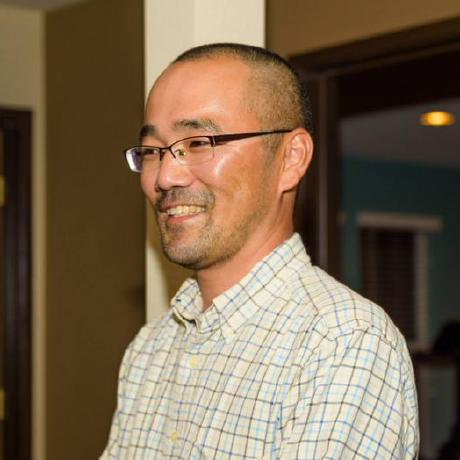
Minoru Otani
Professor
Division of Quantum Condensed Matter Physics, Center for Computational Sciences, University of Tsukuba
I develop first-principles methods for electrochemical interfaces, such as the effective screening medium (ESM) method and ESM-RISM, and use them to understand phenomena at surfaces and interfaces in batteries, catalysis, and corrosion.
Research
Surfaces and interfaces host phenomena that help a device, such as catalysis and the formation of protective films, and phenomena that harm it, such as corrosion and surface poisoning. These microscopic processes are hard to observe directly. We develop our own simulation methods based on first-principles electronic structure calculations and simulate electrochemical interfaces under a controlled electrode potential. The methods are implemented and distributed in Quantum ESPRESSO. → Research
Bringing Computational Science into Practice
Beyond developing computational methods, I work to bring research results into practical use through exchange between academia and industry and collaboration across fields.
- EIS Consortium (Representative Director): a general incorporated association of companies and researchers working on electrochemical interface simulation. Through workshops and working groups, members share knowledge across academia and industry. For details of its activities, see the overview slides (PDF, in Japanese).
- Project Office for Society-Academia Collaboration in Computational Sciences, Center for Computational Sciences (Head): promotes collaboration with industry through workshops and tutorials, so that the computational techniques and simulation programs developed at the Center for Computational Sciences are put to practical use.
- Interdisciplinary Hub (in charge of the materials science area): in FY2023 the Center for Computational Sciences was selected for MEXT's program for forming interdisciplinary research hubs, as a hub for bringing computational science into society in the AI era. The project expands industry–academia–government collaboration in problem solving with supercomputers and computational methods, and broadens the use of computational methods in companies. I am in charge of its materials science area.
For undergraduate and graduate students
The surface and interface phenomena we study demand a broad knowledge that spans several fields: quantum mechanics, thermodynamics and statistical mechanics, and electromagnetism as taught in the department, together with surface physics and electrochemistry. If you would like to put what you have learned to work in materials science, please get in touch.
For researchers in industry
Joint research and academic consultation are handled by the Headquarters for International Industry-University Collaboration, University of Tsukuba. You are also welcome to contact me directly or through the EIS Consortium. We also accept working professionals as doctoral students.
Contact
Room 219, 2F New Building, Center for Computational Sciences, University of Tsukuba
1-1-1 Tennodai, Tsukuba, Ibaraki 305-8577, Japan
Phone +81-29-853-4273 / Email otani@ccs.tsukuba.ac.jp